The Vigil of Samhain: What the Ancient Celts Believed on October 31
 Morgana Vidal
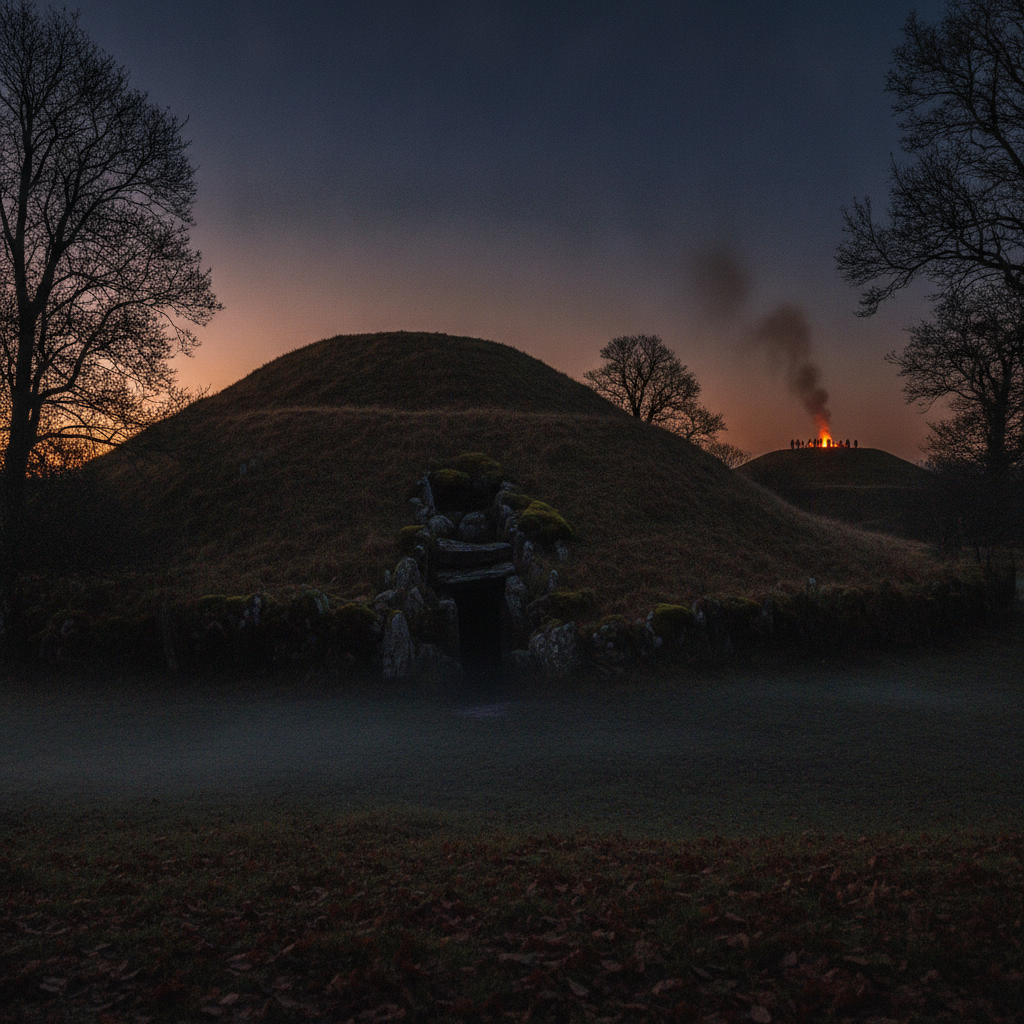
To the Iron Age and early medieval Celts of Ireland, Scotland, and the Isle of Man, Samhain was neither a “festival of evil” nor a worship of demons: it was the threshold night between the bright half of the year and the dark half of winter. Marked at sunset on October 31, the vigil of Samhain signified a suspension of ordinary time when cattle returned from high pastures, laws were renewed at royal assemblies, and the boundary separating the living community from the Otherworld—the Sídhe—became temporarily permeable.
Three documented rituals formed the backbone of this Gaelic boundary vigil:
- Extinction and relighting of the hearth fire: Families let domestic embers die down so every household could rekindle its winter fire from a single communal flame blessed at ceremonial hills.
- The Dumb Supper and place settings for ancestors: Households left seats, bread, and ale at the table for departed kin rather than locking doors out of terror.
- Guising and lantern vigils: Disguises made of straw or blackened faces protected travelers walking dark roads between settlements while carrying embers inside carved turnips.
What archaeology and Irish manuscripts confirm about Tlachtga and Tara
While 18th-century antiquarians invented lurid claims about druidic “Lords of Death,” modern philology and excavations give a much clearer picture. Radiocarbon dating led by archaeologist Stephen Davis at the Hill of Ward (Tlachtga) in County Meath revealed monumental concentric earthworks and intensive burning events spanning from roughly 200 CE into the early medieval period, corroborating medieval chronicles like Keating’s Foras Feasa ar Éirinn.
Meanwhile, tales preserved in the 12th-century Lebor na hUidre and Tóruigheacht Dhiarmada agus Ghráinne depict Samhain as a night when fairy mounds opened and figures from the Otherworld entered human halls. To navigate that unpredictable night, rural communities relied on divination using peeled apples, hazelnuts, and oak embers—symbols that directly explain why Halloween is still celebrated on October 31 centuries later.
Why people wore disguises and left food by the doorway
In rural Gaelic folklore documented by collectors such as Kevin Danaher in The Year in Ireland (1972), stepping outside after dusk on Samhain required caution because wandering aos sí (the Fair Folk) or restless shades traveled the lanes. Wearing animal pelts, tattered cloaks, or ash smudges confused spirits into mistaking a villager for one of their own.
Inside cottages, offering hospitality kept misfortune away. Unharvested blackberries left on hedgerows after October 31 were considered spoiled by the Púca, while warm loaves, milk, or spiced Soul Cakes baked for Samhain and All Souls served both as charity for the poor and symbolic tribute to the dead—echoing older European anxieties about quarantine and burial customs explored in stories like Poveglia Island in Venice.
From Celtic threshold to modern folklore
Even after Christianization, rural communities preserved the core intuition of Samhain: winter demanded solidarity, fire, preserved food, and respect for mortality. That continuity—rather than any single ancient creed—is why autumn lanterns and masked visits survived intact for more than a thousand years.
About the Author
