Why Do We Celebrate Halloween? From Celtic Samhain to October 31
 Morgana Vidal
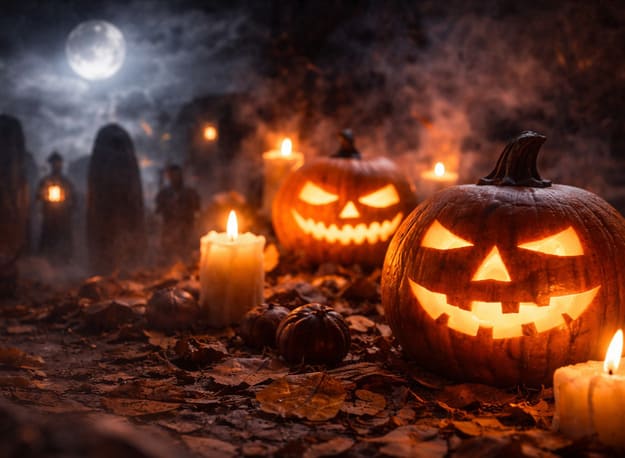
Halloween is celebrated on October 31 because three historical layers converged on that exact date: the Gaelic harvest festival of Samhain, the 9th-century Christian vigil of All Hallows’ Eve, and 20th-century North American civic festivals. Rather than being a modern invention of candy manufacturers, archaeological and monastic records show that end-of-autumn boundary rituals in Ireland and Scotland already marked the transition from harvest to winter more than a millennium before Jack-o’-lanterns appeared on American porches.
Tracing how an agricultural calendar marker became a global night of costumes requires separating 19th-century romantic folklore from surviving medieval manuscripts. Three documented shifts explain why October 31 looks the way it does today:
- Celtic Samhain (pre-9th century): Marked the end of the pastoral year at dusk on October 31, when livestock were brought down from summer pastures and communities gathered around sacred hearth fires.
- Christian Liturgical Calendar (8th–11th centuries): Pope Gregory III dedicated an oratory in Rome to all saints on November 1, and Pope Gregory IV later extended the observance across Western Christendom, turning October 31 into All Hallows’ Eve.
- Irish & Scottish Diaspora + 1920s U.S. Cities: Millions of emigrants carried guising, turnip lanterns, and baking traditions like Soul Cakes to North America, where municipalities transformed chaotic prank nights into supervised neighborhood trick-or-treating.
What happened on Samhain according to medieval Irish sources?
Early vernacular Irish texts such as Tochmarc Emire and the Metrical Dindshenchas describe Samhain (literally “summer’s end”) as one of the four quarterly assemblies of Gaelic society. Because the Celtic day began at sunset, the festival opened at twilight on October 31 and lasted through November 1. Fires throughout households were extinguished and relit from a central ceremonial bonfire—most famously at Tlachtga (the Hill of Ward in County Meath, confirmed by radiocarbon excavation trenches dating back to the Iron Age).
Unlike popular modern claims about blood sacrifices at stone circles, surviving Irish monastic annals emphasize hospitality, feasting, legal truces, and divination games involving apples and hazelnuts. If you want a closer look at those primary beliefs and hearth customs, read our deep dive into what the ancient Celts believed during the vigil of Samhain.
How All Hallows’ Eve reshaped October 31
Christianity did not invent Samhain, nor did the Church eradicate popular autumn customs overnight. When November 1 became the Feast of All Saints—and November 2 was formalized as All Souls’ Day around the year 998 by Abbot Odilo of Cluny—older customs around fire, ancestral memory, and boundary nights merged with prayers for the dead.
Out of that synthesis came “souling” across Britain and Ireland: poor neighbors and children went door to door offering prayers for departed relatives in exchange for spiced round cakes marked with a cross. Bakers still recreate those traditional medieval Soul Cakes for Halloween as a direct culinary link between All Hallows’ Eve and modern trick-or-treating. That Christian-pagan overlap still sparks debate among denominations today—a theological question we break down in our guide on what the Bible actually says about Halloween.
Why pumpkins, costumes, and trick-or-treating exploded after 1920
Scottish and Irish immigrants carved hollowed turnips, mangelwurzels, and rutabagas with grotesque faces illuminated by embers—based on the folktale of Stingy Jack—to ward off wandering spirits. When those families arrived in North America during the Great Famine of the 1840s, they found native pumpkins far larger, softer, and easier to carve than turnips.
By the 1910s and 1920s, American towns like Anoka, Minnesota (which held one of the earliest city-wide civic parades in 1920 to curb Halloween vandalism) turned unruly youth pranks into organized parades. The specific phrase “trick or treat” first appeared in print in Lethbridge, Alberta (Canada) in November 1927 before becoming ubiquitous across suburban neighborhoods after World War II once sugar rationing ended in 1947.
About the Author

 Esqueletin