Poveglia Island in Venice: The Real History of the Plague Quarantine & Asylum
 Darío Solano
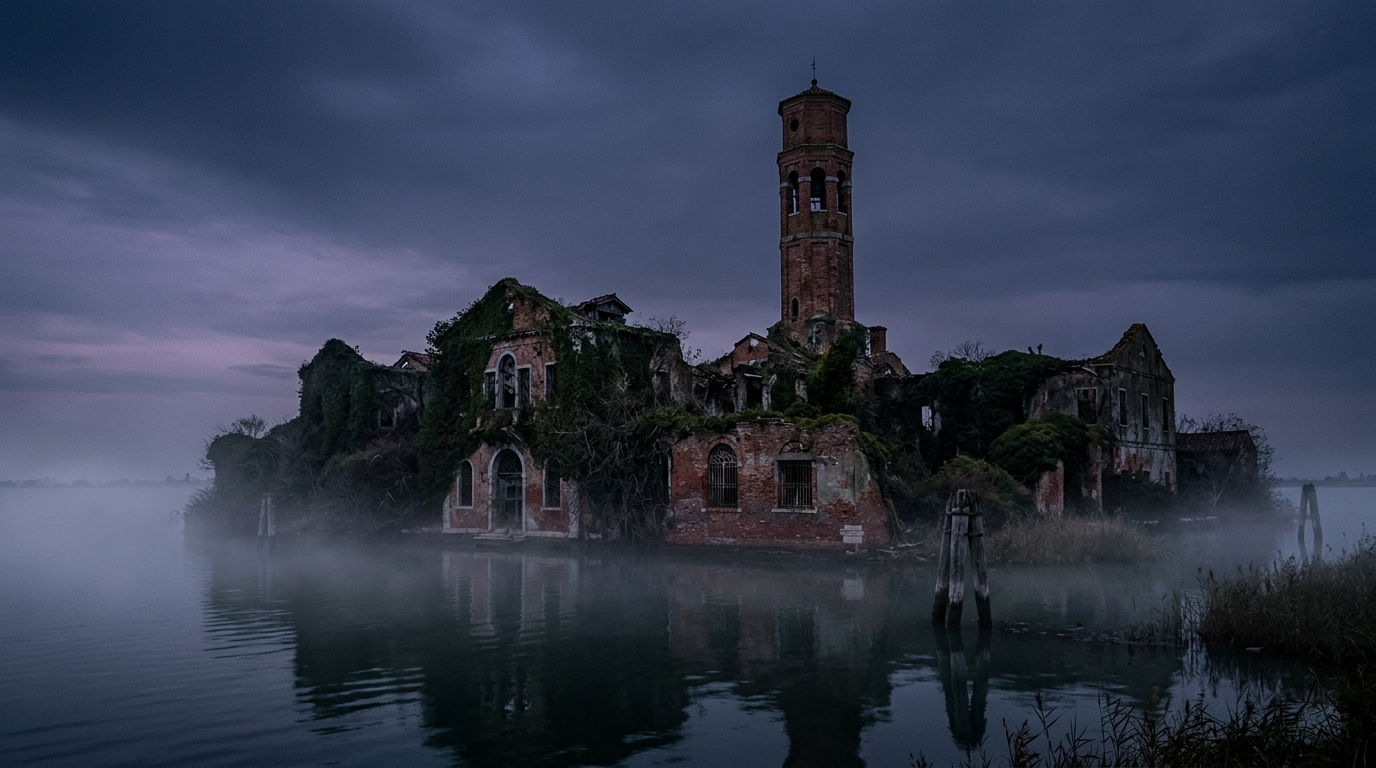
Poveglia is a small 7.5-hectare island in the southern Venetian Lagoon near Malamocco that functioned from 1793 to 1814 as an official maritime plague quarantine station and later, from 1922 until 1968, as a municipal convalescent and geriatric home—never as a secret torture asylum run by a murderous director as viral internet myths claim. Abandonment, dense overgrowth, and strict Italian access prohibitions have turned its crumbling brick wards into one of Europe’s most photographed off-limits landmarks.
Looking across the lagoon from the Lido promenade, three historical realities explain why Poveglia captured the global dark-tourism imagination:
- Maritime quarantine station (1793–1814): Under decrees of the Venetian Magistrato alla Sanità, crews arriving with suspected bubonic plague or yellow fever moored off Poveglia, and sailors who died aboard quarantined vessels were buried in communal lime pits on the island.
- Convalescent hospital (1922–1968): Venice converted the existing Napoleonic barracks and medical buildings into a long-stay geriatric and convalescent care home (Casa di Riposo) that operated openly for 46 years before closing in 1968.
- Strictly restricted state property: Since the 1970s, unauthorized landing on Poveglia has remained illegal under Italian municipal law, feeding urban legends far faster than historians could debunk them.
Before the plague: From Roman sanctuary to abandoned parish
Contrary to stories that treat Poveglia solely as a burial rock, archival charters show a flourishing medieval fishing and salt-making village called Popilia. Residents fled Padua and Este to settle the island during Lombard invasions in the 6th and 7th centuries, and by the 9th century Poveglia enjoyed self-governing privileges until the War of Chioggia (1379–1381), when Venetian authorities evacuated its inhabitants to reinforce lagoon defenses against Genoa.
After centuries as an isolated naval outpost marked by its octagonal brick fort, the Venetian Republic established permanent quarantine procedures on Poveglia in 1793 following a plague outbreak aboard merchant ships entering the Adriatic. Alongside Venice’s earlier Lazzaretto Vecchio and Lazzaretto Nuovo, Poveglia served as an emergency buffer to inspect cargo and isolate infected mariners away from the crowded canals of San Marco.
Separating historical hospital records from the asylum legend
Online ghost-hunting shows popular in the 2000s repeatedly claimed that a 1920s psychiatrist conducted brutal lobotomies on Poveglia before jumping from the 12th-century bell tower (note that only the base and octagonal structure of the medieval church tower remain—the spire was removed centuries ago). Italian municipal archives in Venice contain zero records of experimental neurosurgery or a suicidal asylum director at Poveglia; patients suffering from acute psychiatric disorders in Venice were institutionalized on San Servolo and San Clemente, two completely different lagoon islands.
Still, walking past Poveglia’s silent shoreline by vaporetto from Malamocco leaves a visceral impression: crumbling red-brick corridors tangled in ivy recall centuries of human anxiety over contagion, burial, and remembrance—themes deeply intertwined with the historical origins of Halloween and ancient European vigils for the dead.
Can you visit Poveglia Island legally today?
No—general tourist access remains prohibited for structural safety reasons, though local grassroots group Poveglia per Tutti has campaigned for years to turn the island into an open lagoon park. Travelers interested in Venice’s genuine plague history can legally visit Lazzaretto Nuovo via guided heritage boat tours from Fondamente Nove or San Marco.
About the Author
